The dispute dominated migration discussions at the European Council summit in Brussels, where Spanish Prime Minister Pedro Sánchez rejected accusations that his country was encouraging irregular migration across Europe. Despite sharp exchanges between national leaders, the summit ended with only three sentences devoted to migration in its final conclusions, highlighting the difficulty of reaching a common position.
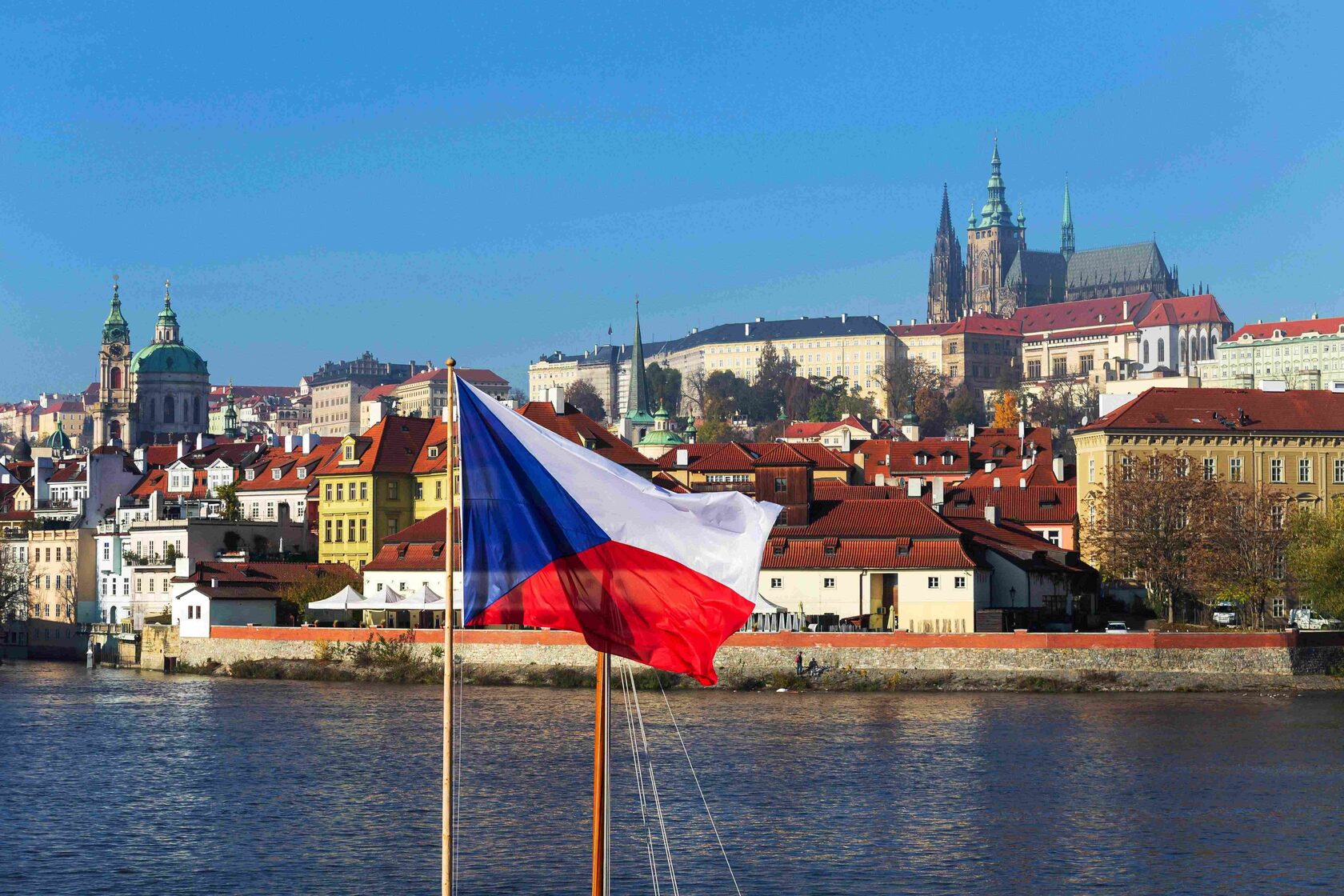
Czechia Raises the Prospect of Defending Its Borders
Speaking ahead of Friday’s European Council discussions, Babiš warned that Czechia might eventually need to take measures to protect its borders against migration originating in other European countries. He indicated that his administration was already preparing for such a scenario but provided no information about the measures under consideration.
The Czech leader directed particularly strong criticism at Spain, accusing certain politicians of supporting demographic changes to maintain political power. He also identified Germany, Sweden, and the Netherlands as countries experiencing difficulties with refugee integration and accommodation.
Babiš had made similarly forceful remarks less than a week earlier during a Sunday appearance alongside First Deputy Prime Minister Karel Havlíček. Referring to developments in Germany, he suggested that Czechia could eventually require “an army on our border with Germany.”
When questioned about proposals to establish migrant reception facilities outside the European Union, Babiš instead emphasized stronger action against human smugglers. He called for those involved in trafficking operations to be imprisoned and for authorities to “sink the empty boats.”
His position reflects the broader immigration agenda of his ANO party, which belongs to the Patriots for Europe political group in the European Parliament. During his time as opposition leader, Babiš described the EU Pact on Migration and Asylum as the most serious betrayal in Czechia’s modern history. The pact's provisions entered into force in June.
Any attempt to introduce additional border restrictions would face legal constraints. Czechia is surrounded entirely by countries participating in the Schengen Area, where internal border controls are generally prohibited. Under the Schengen Borders Code, such controls may be temporarily reinstated only as a measure of last resort.
Spain Rejects Allegations That Its Migration Policy Threatens the EU
Pedro Sánchez responded to criticism of Spain's regularization program during his closing press conference in Brussels.
“One thing is the blah, blah, blah and another is reality,” the Spanish prime minister declared, arguing that the accusations were inconsistent with the available evidence.
Sánchez distinguished between his policy disagreements with Danish Prime Minister Mette Frederiksen and the statements made by Babiš. He characterized the Czech leader's rhetoric as resembling that of Vox, Spain's far-right political party.
The Spanish government maintains that its approach is consistent with the EU's new migration and asylum framework, which Madrid helped negotiate during its presidency of the Council of the European Union in 2023.
Sánchez pointed to migrant interceptions in the Atlantic and refusals of entry at Spanish airports as evidence of the country's enforcement efforts. He also rejected suggestions that Spain had become a transit route through which undocumented migrants could move into other EU member states.
The prime minister argued that criticism of Spain ignored comparable migration policies elsewhere in Europe. Several countries, he observed, issue substantial numbers of work permits to foreign nationals without describing the process as regularization.
Italy provides a prominent example. Under its existing immigration arrangements, the country has authorized nearly 500,000 work visas for non-EU nationals through 2028.
Italian Prime Minister Giorgia Meloni nevertheless joined other European leaders in criticizing Spain's legalization initiative.
Denmark and Austria Push for Stronger EU Migration Restrictions
Denmark emerged as another leading critic of Spain's approach.
Before Friday's discussions, Prime Minister Mette Frederiksen confirmed that she had requested a European Commission assessment of the Spanish regularization program.
“You come to a country illegally, and suddenly you’re allowed to be there legally,” she said, questioning the implications of granting residence rights to people who initially entered or remained in a country without authorization.
Denmark maintains an opt-out from EU asylum and immigration legislation and therefore does not participate in votes on those measures.
Austrian Chancellor Christian Stocker also expressed opposition, warning that Spain's decision could send an undesirable message and create consequences extending beyond its national borders.
Stocker additionally supported proposals to suspend access to asylum procedures during exceptional migration emergencies, including crises comparable to the events in Ceuta.
Denmark, Italy, and Poland sought amendments to the European Council's draft conclusions. Their proposals focused on two principal concerns: reducing policies that might encourage irregular migration and improving coordination when one member state's immigration decisions could affect others.
Subsequent drafts called on EU governments to avoid introducing measures that might create additional incentives for unauthorized migration.
Spain and France resisted those changes.
Although negotiations had produced draft migration provisions extending to nine paragraphs, the final European Council conclusions excluded the contested language.
European Council Fails to Agree on a Broader Migration Strategy
The adopted conclusions contained only a brief statement addressing migration.
EU leaders welcomed the European Commission's intention to cooperate with member states on an emergency response framework and measures concerning the instrumentalization of migration, a practice involving the deliberate use of migrants to exert pressure on national borders.
The final sentence stated that the European Council “will revert to this issue at one of its forthcoming meetings.”
European Commission President Ursula von der Leyen emphasized that decisions concerning the regularization of undocumented migrants fall within national competence.
However, she acknowledged that such policies can produce consequences for other member states, making coordination particularly important within the Schengen Area.
Commission figures indicate that irregular crossings at the EU's external borders declined by approximately 55% over 2024 and 2025.
French President Emmanuel Macron criticized the increasingly political nature of the migration dispute, arguing that it had undermined European unity and the bloc's ability to respond effectively.
Addressing the events in Ceuta, Macron described the situation as a humanitarian tragedy and stated that “what happened was an informational attack” against Spain.
The European Council's conclusions separately expressed solidarity with Spain following the large-scale arrival of migrants in Ceuta in July.
Spain's 2026 Regularization Program Attracts Nearly 1.2 Million Applications
The disagreement centers on Spain's extraordinary immigration regularization initiative, established under Royal Decree 316/2026.
The program opened for applications on April 16, 2026, offering undocumented foreign nationals already living in Spain an opportunity to obtain legal residence.
Eligibility depended on several conditions. Applicants needed to demonstrate that they had entered Spain before January 1, 2026, had remained in the country for at least five consecutive months before submitting their applications, and had no criminal record.
The application period ended on June 30.
Applications received
1,174,978
Initial government projection
~500,000
Applications from Latin Americans
67%
Applications from Colombians
25.9%
The number of applications was more than twice the approximately 500,000 beneficiaries initially anticipated by the Spanish government.
For comparison, Spain's previous large-scale regularization in 2005 generated approximately 692,000 applications.
By July 2, authorities had admitted 609,737 applications for processing. Reaching this procedural stage provides applicants with provisional authorization to reside and work in Spain while their cases are examined.
Approximately 11,000 people had received favorable final decisions by that date.
No subsequent nationwide figures had been published by the responsible ministry.
Successful applicants receive residence permits valid for one year and limited to Spain. After that period, they must transition to the country's ordinary residence permit categories.
The initiative does not automatically grant citizenship, nor does a Spanish residence permit establish an unrestricted right to live or work in other EU member states.
The available evidence also does not establish conclusively whether Spain's regularization initiative has encouraged additional migration into the European Union.
Could Regularization Create a Faster Route to Spanish Citizenship?
Although the program provides residence rather than nationality, obtaining legal status may have longer-term implications for some beneficiaries.
Under the Spanish Civil Code, nationals of Ibero-American countries may qualify to apply for Spanish citizenship after two years of legal residence, compared with the general ten-year residence requirement applicable to most other foreign nationals.
This distinction is particularly relevant because Latin American nationals accounted for 67% of applications under the 2026 regularization initiative.
However, eligibility to apply for citizenship is not equivalent to automatic naturalization. Applicants must still satisfy the relevant legal requirements.
The program therefore creates an initial residence pathway that may subsequently allow certain beneficiaries to pursue Spanish nationality under the country's existing naturalization rules.
Ceuta Migration Crisis Intensifies Disagreements Between EU Governments
The political dispute over Spain's immigration policies became more pronounced following a major migration emergency in Ceuta.
On July 30, tens of thousands of people crossed from Morocco into the Spanish autonomous city on the North African coast.
Spain's Interior Ministry estimated that approximately 50,000 people entered Ceuta, while the city's president, Juan Jesús Vivas, placed the figure at 60,000.
Most of those who crossed subsequently returned to Morocco. Spanish authorities maintain that none of the people who entered irregularly during the incident reached mainland Spain.
The crisis triggered a coordinated political response from other EU governments.
On August 1, leaders representing 22 member states signed a letter criticizing Spain's regularization policy. Italy and Denmark played leading roles in the initiative.
Spain, France, Portugal, Luxembourg, and Ireland declined to sign.
The letter also connected the Ceuta crossings with a June ruling by Spain's Supreme Court that restricted summary returns at sea.
The dispute subsequently led to border-control measures between Spain and Italy.
On August 1, Italy reinstated checks on passengers arriving from Spain through airports and seaports.
Spain responded by introducing reciprocal controls on August 8.
Following discussions between Sánchez and Meloni in Brussels, Italy extended its restrictions for another seven days. Both countries' measures are now scheduled to expire on October 22.
Meloni indicated that the Spanish and Italian interior ministers would use the following week to negotiate alternative cooperation arrangements.
Spain's November Election Adds Political Pressure to the Migration Debate
The confrontation over immigration is unfolding against the backdrop of an approaching Spanish general election.
On October 5, Sánchez called an early parliamentary election for November 29 after the Congress of Deputies rejected his government's housing decrees.
Polling presents conflicting assessments of the political balance.
Most private surveys place the conservative Partido Popular (PP) in the lead. However, the state polling organization's October survey indicates that the governing Socialists are ahead by approximately 12 percentage points.
Vox is polling in the high teens, reflecting the continuing electoral significance of immigration and other contentious domestic issues.
The approaching election adds a further political dimension to the European dispute, with Spain's migration policy becoming a subject of debate both domestically and among EU governments.
EU Migration Policy Faces Further Decisions Before the End of 2026
The European Union has several upcoming opportunities to revisit the disagreements exposed during the Brussels summit.
An informal meeting of EU leaders is scheduled for November 13, followed by a full European Council summit on December 17–18.
Ursula von der Leyen has also indicated that the European Commission intends to present its proposed emergency migration measures before the end of 2026.
The central disagreement remains unresolved: how far individual EU countries can exercise control over immigration and regularization policies when those decisions may affect other members of the Schengen Area.
Spain continues to defend its legalization program as a national policy consistent with European migration rules. Czechia, Denmark, Austria, and other governments have raised concerns about its potential cross-border consequences.
With member states divided over regularization, asylum procedures, internal border controls, and the management of irregular migration, reaching a common EU position remains a significant political challenge.
If you are considering relocating to Europe through these or other programmes, you can book an individual consultation. I will assess your situation, including available residence-permit options, the right to work, family requirements, budget, and legal risks before you submit an application or sign an agreement. Submit a request, and we will develop a step-by-step relocation plan tailored to your objective.