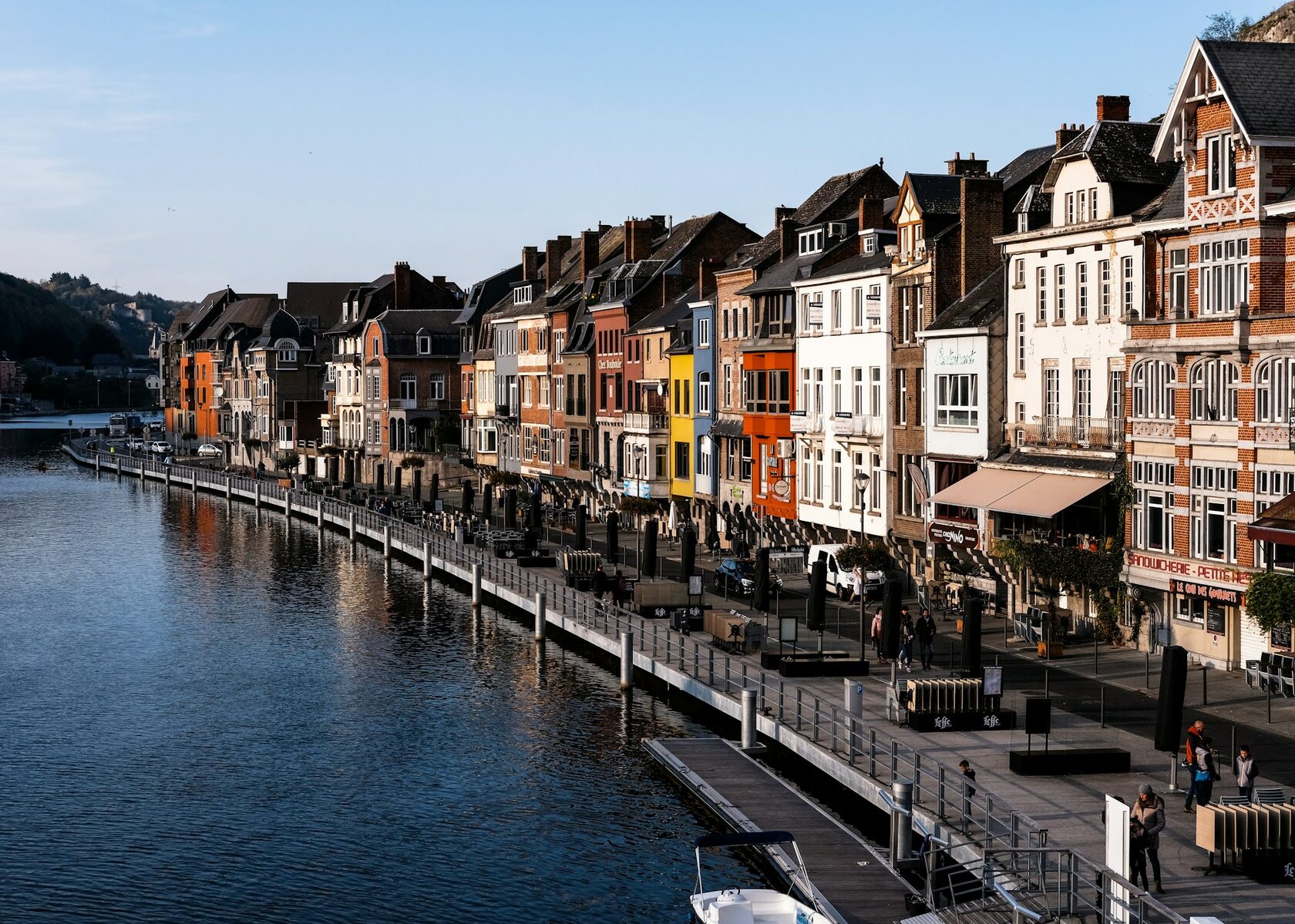
Most overseas real estate investors prefer southern European resorts and island countries. Despite the high liquidity and yields of properties in Cyprus, Greece, Spain, and Portugal, property in central and western Europe is no less profitable.
According to statistics, over the past 10 years, property prices in Germany, France, the Netherlands, and Belgium have slowly but steadily increased by 70%. This is due to a stable economic situation, government support for businesses (including construction), and an influx of new residents. These countries are also distinguished by clear and flexible tax systems, a favorable attitude toward non-residents, and a favorable investment climate. Belgium is a prime example.
One of the strongest and most developed economies in the world, with a high standard of living and ease of doing business, a moderate climate, and a rich history, Belgium is a key tourist, economic, and political center of Europe and the capital of the European Union. The country's popularity is reflected in real estate prices, which are rapidly rising year after year—over the past 25 years, housing costs have quadrupled. Experts estimate that the rental market in Belgium is growing by 6% annually, while the purchase and sale market is growing by 5%. Investment analysts consider the Belgian real estate market one of the most stable in the entire European Union.
So, investing in Belgian real estate is a good idea.
One of the main arguments for this is the low housing prices compared to neighboring France and the Netherlands, while the quality of life is similar, and in some respects even higher.
Belgian Housing Market Analysis: Regions and Prices
As in any country, the cost of buying and renting a home will vary greatly by region. Let's take a closer look.
Brussels and its surroundings
Unsurprisingly, the capital region is the most sought-after and the most expensive. In Brussels and its metropolitan area, the most liquid housing options are apartments and flats, both in new buildings and in older ones (for example, buildings from the late 19th and early 20th centuries), as this architectural ensemble in the center of the Belgian capital is of particular interest.
Prices for a small two-bedroom apartment (60-70 sq. m) in the Laeken district in northern Brussels start at €120,000. A 100-square-meter apartment in a beautiful 19th-century building near the European Parliament costs €200,000-€300,000, while similar apartments in new lofts in trendy districts like Uccle cost €300,000-€400,000. A two- or three-bedroom house in the outskirts of the capital can be found for as little as €450,000, with virtually no upper limit. The capital also boasts a wealth of luxury real estate, with prices starting at €1 million. Overall, prices in Brussels are approximately 15-25% lower than in other European capitals.
Antwerp and Ghent
Belgium's second capital and Europe's second-largest port, Antwerp is a very popular city among both tourists and locals. Its position within the country is likely comparable to that of St. Petersburg in Russia, with its large population of expats, students, and artists. Ghent has a strong reputation among startups and IT professionals. This is why the real estate market in both cities will always be stable. Prices in Antwerp and Ghent are roughly the same: a two-bedroom apartment in the city center can be found for €100,000, while a small studio apartment can be found for €50,000-€60,000.
Bruges and its surroundings
This pleasant, picture-postcard Belgian city continues to attract a steady stream of tourists. Belgians also don't overlook this famous town and often buy apartments (especially in the historic center) or cottages. A small house can be found starting from €250,000.
There are three options for investing in Belgian real estate.
Let's take a closer look.
Purchase of a home for resale
Approximately 40% of real estate investors buy apartments and houses with the intention of reselling them at a profit. What is the reason for this advantage?
Choosing a consistently popular region: housing in the center of Brussels or Antwerp will always be popular.
Choosing a rapidly developing region with a promising future is a choice of cities that are gaining popularity among expats and students, such as Namur, Liège, and Leuven.
Choosing a reputable developer: Belgium is currently experiencing a significant construction boom.
High-quality investments after the purchase: renovations and furnishings typically increase the value of an apartment by 30-60%, even on a small budget.
Fortunately, foreigners are not restricted in any way when purchasing Belgian real estate, so the entire process is the same as for a Belgian citizen. Both individuals and legal entities can complete the transaction.
Procedure:
Find a suitable property. You can use specialized websites for general real estate market analysis, social media, or the existing portfolio of an agency or private realtor.
View the property.
Conclude a preliminary agreement with the seller expressing your desire to purchase the property. At this stage, a deposit is also made, usually 10%, which is non-refundable regardless of the outcome. Then, a sales contract is drawn up (it specifies all the key points: price, terms, detailed description, and a floor plan of the property).
The transaction is reviewed by a notary. If the property is in order, the remaining purchase price and transaction costs (1-2%) are paid, and a date for signing the sales contract is agreed upon.
The transaction registration deed is signed within 1-3 months after signing the sales contract. This document finalizes the transaction. The process can be expedited by agreement with the notary.
Also, don't forget to budget for the one-time property tax of 12.5%.
The entire purchase process usually takes no more than 2-3 months. Additionally, non-residents can qualify for a home loan that will cover up to 60-70% of the property's value. Attractive interest rates, averaging 3% per annum, are a bonus. Of course, in this case, you will need to provide documents confirming your solvency.
Once you own a house or apartment in Belgium, you can manage your property as you wish—renovate it and resell it within a year at a handsome premium, wait until the area's infrastructure becomes more developed, or keep it as your permanent residence abroad.
Owning real estate in Belgium does not provide grounds for citizenship or a residence permit, but it can positively impact your future residency requirements and significantly extend the validity of your Schengen visa.
Buying a Property for Rent
If you've completed the steps described in the previous section, you can consider renting out your property in Belgium as a potential source of income.
According to experts, renting out your property can generate passive annual income of approximately 5-15% of the property's value. Thus, by purchasing a spacious apartment in central Brussels for €200,000, you can earn an income of €10,000 to €30,000 per year. Short-term rentals (such as daily rentals on Airbnb) are usually more profitable than long-term rentals, but they are also, of course, riskier—the wear and tear of the property and the risk of damage increase by an average of 30-40%. Renting out a property for a long term (at least six months) provides a stable income, peace of mind about the apartment's condition (a deposit ensures this), and monthly maintenance costs (tenants also cover utilities).
As for rental taxes, the correct calculation is based on the commune in which the property is located and the landlord's current circumstances, including family composition and financial situation. Therefore, each case should be approached individually.
Buying and renovating a home with subsequent resale
Another promising investment option in Belgian real estate is rennovation. The idea is to purchase a property in need of significant renovation and upgrading at a relatively low price, then renovate it and sell it at a new price that exceeds the total investment by an average of 30-60%. This allows for a guaranteed profit in a short period of time, again from subsequent resale or rental.
Furthermore, foreign investors often choose to invest in future commercial real estate. For example, in the west and east of Belgium, many estates and castles in poor condition are for sale. The investor purchases such a property, renovates, renovates, and restores it, and then sells the space to a hotel or restaurant chain.
This investment strategy has become popular in Europe over the past 10 years, as the stock of properties in need of renovation in the Old World is still quite large. However, it's crucial to conduct extensive analytical work and soberly evaluate the project in terms of liquidity and return on investment: region, cost of investment, target audience.
Countries often initiate programs like "Estate for €1," for example, in Spain, Italy, and Greece. However, this type of investment is still quite risky.
Conclusion
Belgium is an excellent option for a foreign real estate investor. Convenient conditions for purchasing and subsequently managing property, access to loans, a stable real estate market, and high construction rates distinguish this small Kingdom from its Western neighbors. The choice of investment strategy—resales, rentals, or redevelopment—is entirely up to you. However, as a non-resident, it can sometimes be difficult to accurately assess all the risks and specifics of the country, its legislation, and taxation. Therefore, we recommend seeking the assistance of trusted professionals—realtors, lawyers, and real estate agencies.
According to statistics, over the past 10 years, property prices in Germany, France, the Netherlands, and Belgium have slowly but steadily increased by 70%. This is due to a stable economic situation, government support for businesses (including construction), and an influx of new residents. These countries are also distinguished by clear and flexible tax systems, a favorable attitude toward non-residents, and a favorable investment climate. Belgium is a prime example.
One of the strongest and most developed economies in the world, with a high standard of living and ease of doing business, a moderate climate, and a rich history, Belgium is a key tourist, economic, and political center of Europe and the capital of the European Union. The country's popularity is reflected in real estate prices, which are rapidly rising year after year—over the past 25 years, housing costs have quadrupled. Experts estimate that the rental market in Belgium is growing by 6% annually, while the purchase and sale market is growing by 5%. Investment analysts consider the Belgian real estate market one of the most stable in the entire European Union.
So, investing in Belgian real estate is a good idea.
One of the main arguments for this is the low housing prices compared to neighboring France and the Netherlands, while the quality of life is similar, and in some respects even higher.
Belgian Housing Market Analysis: Regions and Prices
As in any country, the cost of buying and renting a home will vary greatly by region. Let's take a closer look.
Brussels and its surroundings
Unsurprisingly, the capital region is the most sought-after and the most expensive. In Brussels and its metropolitan area, the most liquid housing options are apartments and flats, both in new buildings and in older ones (for example, buildings from the late 19th and early 20th centuries), as this architectural ensemble in the center of the Belgian capital is of particular interest.
Prices for a small two-bedroom apartment (60-70 sq. m) in the Laeken district in northern Brussels start at €120,000. A 100-square-meter apartment in a beautiful 19th-century building near the European Parliament costs €200,000-€300,000, while similar apartments in new lofts in trendy districts like Uccle cost €300,000-€400,000. A two- or three-bedroom house in the outskirts of the capital can be found for as little as €450,000, with virtually no upper limit. The capital also boasts a wealth of luxury real estate, with prices starting at €1 million. Overall, prices in Brussels are approximately 15-25% lower than in other European capitals.
Antwerp and Ghent
Belgium's second capital and Europe's second-largest port, Antwerp is a very popular city among both tourists and locals. Its position within the country is likely comparable to that of St. Petersburg in Russia, with its large population of expats, students, and artists. Ghent has a strong reputation among startups and IT professionals. This is why the real estate market in both cities will always be stable. Prices in Antwerp and Ghent are roughly the same: a two-bedroom apartment in the city center can be found for €100,000, while a small studio apartment can be found for €50,000-€60,000.
Bruges and its surroundings
This pleasant, picture-postcard Belgian city continues to attract a steady stream of tourists. Belgians also don't overlook this famous town and often buy apartments (especially in the historic center) or cottages. A small house can be found starting from €250,000.
There are three options for investing in Belgian real estate.
Let's take a closer look.
Purchase of a home for resale
Approximately 40% of real estate investors buy apartments and houses with the intention of reselling them at a profit. What is the reason for this advantage?
Choosing a consistently popular region: housing in the center of Brussels or Antwerp will always be popular.
Choosing a rapidly developing region with a promising future is a choice of cities that are gaining popularity among expats and students, such as Namur, Liège, and Leuven.
Choosing a reputable developer: Belgium is currently experiencing a significant construction boom.
High-quality investments after the purchase: renovations and furnishings typically increase the value of an apartment by 30-60%, even on a small budget.
Fortunately, foreigners are not restricted in any way when purchasing Belgian real estate, so the entire process is the same as for a Belgian citizen. Both individuals and legal entities can complete the transaction.
Procedure:
Find a suitable property. You can use specialized websites for general real estate market analysis, social media, or the existing portfolio of an agency or private realtor.
View the property.
Conclude a preliminary agreement with the seller expressing your desire to purchase the property. At this stage, a deposit is also made, usually 10%, which is non-refundable regardless of the outcome. Then, a sales contract is drawn up (it specifies all the key points: price, terms, detailed description, and a floor plan of the property).
The transaction is reviewed by a notary. If the property is in order, the remaining purchase price and transaction costs (1-2%) are paid, and a date for signing the sales contract is agreed upon.
The transaction registration deed is signed within 1-3 months after signing the sales contract. This document finalizes the transaction. The process can be expedited by agreement with the notary.
Also, don't forget to budget for the one-time property tax of 12.5%.
The entire purchase process usually takes no more than 2-3 months. Additionally, non-residents can qualify for a home loan that will cover up to 60-70% of the property's value. Attractive interest rates, averaging 3% per annum, are a bonus. Of course, in this case, you will need to provide documents confirming your solvency.
Once you own a house or apartment in Belgium, you can manage your property as you wish—renovate it and resell it within a year at a handsome premium, wait until the area's infrastructure becomes more developed, or keep it as your permanent residence abroad.
Owning real estate in Belgium does not provide grounds for citizenship or a residence permit, but it can positively impact your future residency requirements and significantly extend the validity of your Schengen visa.
Buying a Property for Rent
If you've completed the steps described in the previous section, you can consider renting out your property in Belgium as a potential source of income.
According to experts, renting out your property can generate passive annual income of approximately 5-15% of the property's value. Thus, by purchasing a spacious apartment in central Brussels for €200,000, you can earn an income of €10,000 to €30,000 per year. Short-term rentals (such as daily rentals on Airbnb) are usually more profitable than long-term rentals, but they are also, of course, riskier—the wear and tear of the property and the risk of damage increase by an average of 30-40%. Renting out a property for a long term (at least six months) provides a stable income, peace of mind about the apartment's condition (a deposit ensures this), and monthly maintenance costs (tenants also cover utilities).
As for rental taxes, the correct calculation is based on the commune in which the property is located and the landlord's current circumstances, including family composition and financial situation. Therefore, each case should be approached individually.
Buying and renovating a home with subsequent resale
Another promising investment option in Belgian real estate is rennovation. The idea is to purchase a property in need of significant renovation and upgrading at a relatively low price, then renovate it and sell it at a new price that exceeds the total investment by an average of 30-60%. This allows for a guaranteed profit in a short period of time, again from subsequent resale or rental.
Furthermore, foreign investors often choose to invest in future commercial real estate. For example, in the west and east of Belgium, many estates and castles in poor condition are for sale. The investor purchases such a property, renovates, renovates, and restores it, and then sells the space to a hotel or restaurant chain.
This investment strategy has become popular in Europe over the past 10 years, as the stock of properties in need of renovation in the Old World is still quite large. However, it's crucial to conduct extensive analytical work and soberly evaluate the project in terms of liquidity and return on investment: region, cost of investment, target audience.
Countries often initiate programs like "Estate for €1," for example, in Spain, Italy, and Greece. However, this type of investment is still quite risky.
Conclusion
Belgium is an excellent option for a foreign real estate investor. Convenient conditions for purchasing and subsequently managing property, access to loans, a stable real estate market, and high construction rates distinguish this small Kingdom from its Western neighbors. The choice of investment strategy—resales, rentals, or redevelopment—is entirely up to you. However, as a non-resident, it can sometimes be difficult to accurately assess all the risks and specifics of the country, its legislation, and taxation. Therefore, we recommend seeking the assistance of trusted professionals—realtors, lawyers, and real estate agencies.
If you're planning to obtain a residence permit, invest in a country's economy, or purchase foreign real estate, we invite you to a consultation with our company. During a personal online meeting, we'll discuss your questions in detail and create a step-by-step action plan for you.